
Knox County Directory Collection Shelf
McClung's collection at the East Tennessee History Center is the central shelf for historical Knoxville directory work. For Knox County, it describes a rare complete collection of Knoxville directory volumes from 1859 to the present, but the collection-wide statement does not mean every year was printed or survives in the same format. Check the catalog and the actual volume before relying on a gap-free run. The collection also holds telephone books, newspapers, maps, family files, biographies, and microfilm that can test a directory clue.
| Collection | Years | Where held | Access |
|---|---|---|---|
| Knoxville directory volumes | 1859 to present collection, with volume-by-volume gaps to check | Calvin M. McClung Historical Collection | Non-circulating, on-site research; selected scans are digital |
| Knoxville telephone directories | 1898 to present set | McClung reference desk | On-site reference use |
| Greater Knoxville cross-reference volumes | 1992 onward run noted in the catalog | McClung catalog and collection | Check the particular community and volume |
| 1907 Knoxville volume 23 | 1907 | Google Books digitized record | Online page scans and OCR, read against the printed page |
| Local newspaper microfilm | More than 2,000 rolls across local titles | McClung Historical Collection | On-site; copies listed at $0.25 per page |
City Directory Company of Knoxville titles include an 1859-60 photocopy and 1901 and 1902 holdings, with sequential publication from 1923 noted in the catalog. Polk titles appear in later holdings from 2000 onward. A 2009 Knoxville volume was not published, a documented gap worth recording rather than filling with an assumption.
Using the Knox Directory Shelf
The Calvin M. McClung Historical Collection is on the third floor of the East Tennessee History Center at 601 South Gay Street in Knoxville. The Knox County collection is non-circulating, and librarians can help with spelling variants, place names, and the transition from a modern address to an older source. Day-specific public hours are posted on the collection location page. Special collections and TAMIS materials require an appointment through the collection.
McClung's collection overview identifies directories, newspapers, maps, genealogy files, and microfilm available in the Knox County history stack.
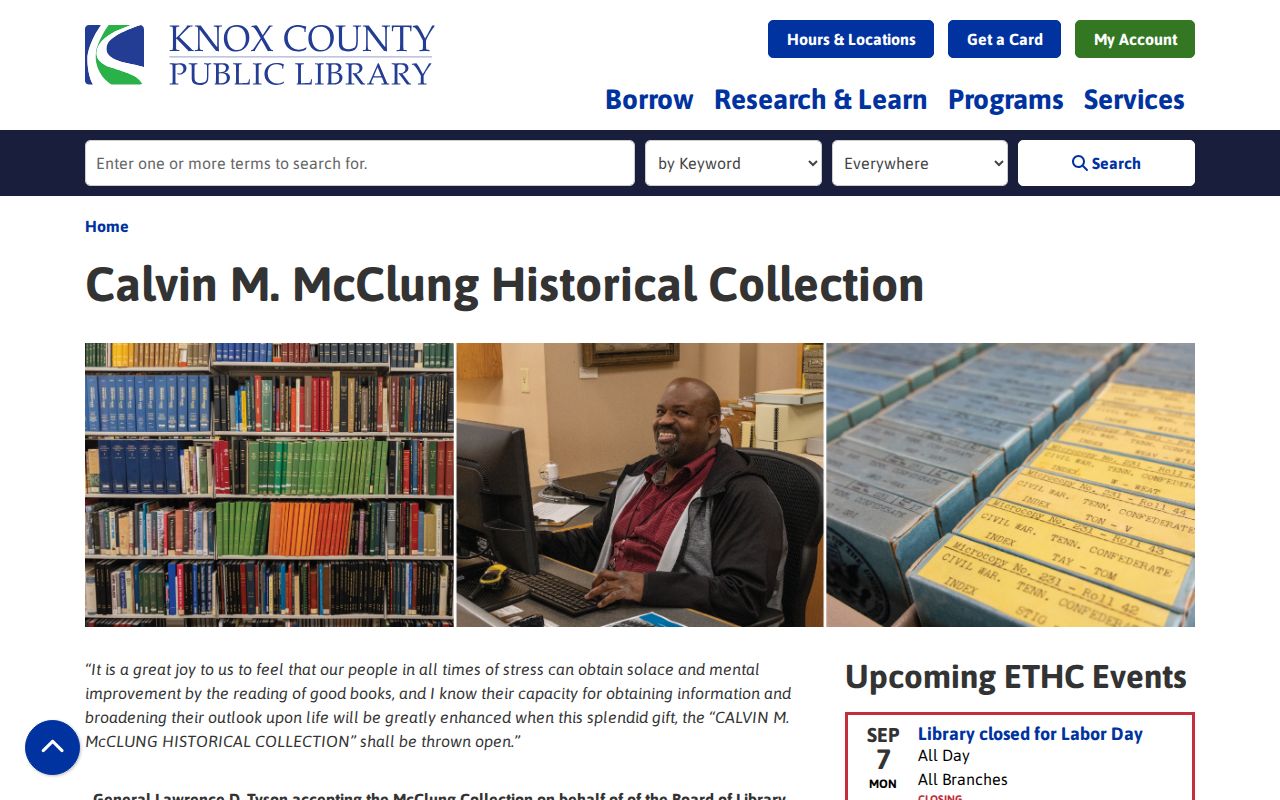
Bring the name, street spelling, approximate year, and any nearby cross street. That small ledger makes it easier to compare a directory line with a newspaper page, map sheet, or county record without mixing up similar names.
Note: McClung staff can route research by names and places, while the original volume or scan remains the evidence to cite.
Reading Knox County Directory Lines
A Knoxville directory entry is compact and often information-dense. For Knox County research, the digitized 1907 volume shows a name, occupation or business association, street address, and relationship or status abbreviations. A person may be listed under a business, at a residence, or in a way that reflects the compiler's convention. Read the printed abbreviation key before expanding OCR text. “Wid” and “bkkpr” are examples of terms that OCR can misread.
| Name or headword | Copy spelling, initials, suffixes, and alternate listings exactly; similar names are common. |
|---|---|
| Residence | Record number, direction, street type, apartment or room notation, then compare the next year. |
| Household notation | Capture spouse, widow or widower, and status abbreviations only as printed. |
| Work line | Note the occupation, business name, or business address as a dated identity clue. |
| Ownership-status mark | Preserve any printed designation, but do not substitute it for a title record. |
| Source control | Keep directory title, publisher, year, page, and repository or scan URL. |
The entry is not an official census. A person can be omitted, duplicated, listed at a business, or carried forward after a move. Check the same person or address in the next available volume before drawing a conclusion.
- Criss-cross directory
- The address-ordered section that can point from a street number to a dated occupant entry.
- Householder index
- A name-focused arrangement intended to identify the household heading used by that volume.
- Abbreviation key
- The printed guide that controls how status and business shorthand should be read.
Knox County 1907 Directory Scan
The online 1907 Knoxville volume 23 gives Knox County researchers a useful example of how to work from a scanned page. Search the OCR for a surname or street, then inspect the page image for the punctuation, initials, abbreviation, and column placement that OCR may have lost. Preserve the volume and page with the entry. A directory reference without its year cannot establish the same thing as a second entry a decade later.
Google Books' 1907 Knoxville directory record provides the digitized volume used for a page-level check.
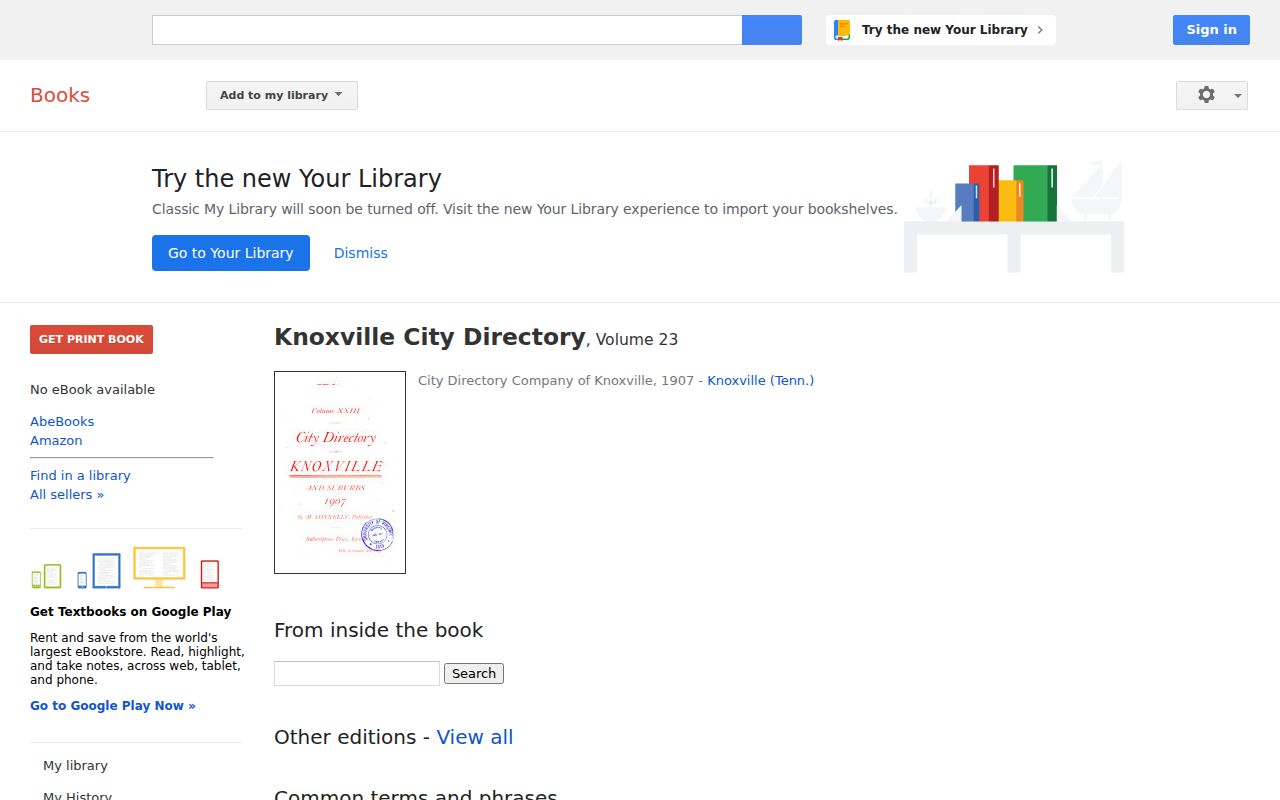
The scan illustrates why the printed abbreviation key and the visual page matter. For Knox County searches, use OCR to find likely lines quickly, then treat the image as the reading copy.
Tracing Knox County Directory Volumes
Directory years bridge the long gap between census schedules. For Knox County family research, begin with one confirmed person or address, then build a dated trail instead of trying to make one line prove a full household history. A 1900 or 1910 census household, a 1907 directory entry, and a 1917 Sanborn map answer different questions. Keep the exact address, page, relationship notation, and whether the source is city-only or a wider metro directory.
- Find the name or address in one volume and copy every spelling, initial, household notation, and page reference.
- Check the same name and street in the next available year, including the reverse or criss-cross section when present.
- Compare telephone volumes for an additional name-and-address clue in the phone era.
- Pair the resulting date range with the nearest census years, keeping each source's date separate.
- Use an obituary, probate index, cemetery card, or recorded deed to test a disappearance, move, or family connection.
A person leaving a volume might have moved, died, been omitted, changed names, or been listed under a business. The answer comes from another dated source, not from the absence alone.
Knox County Reverse Directory Clues
Reverse and criss-cross pages turn the search around: address first, then a year-specific occupant clue. In Knox County, they are especially useful when a family appears under initials in the name section or when a business and a residence are separated. Search the exact street spelling and number, then read nearby entries to see whether numbering, a block, or a street label has changed.
The street-level records for a current parcel require a different evidence chain. For assessor cards, KGIS layers, permits, and deeds tied to a modern address, use the Knox County by-street directory rather than treating an old directory as current occupancy evidence.
Knox County Directory Timeline
Knox County's preservation pattern explains why a paper directory can still be the best starting point for a nineteenth- or twentieth-century household question. The Knox County record tradition began in 1792, and the Archives' earliest holdings begin with that founding. Directory material begins with the Knoxville collection in 1859, while the record environment remains a mix of physical volumes, indexes, scans, and custodian files.
- 1792: Knox County's early court, land, tax, marriage, estate, and government records begin in the archival tradition.
- 1859: the Knoxville city-directory collection begins, subject to individual-volume gaps.
- 1898: the Knoxville telephone-directory set begins at McClung.
- 1907: Knoxville volume 23 is available as a digitized sample.
- 2009: a Knoxville volume was not published.
The timeline is a source map, not proof of an uninterrupted annual run. The catalog, scan, or physical volume controls the citation for each year.
Knox County Directory Newspaper Leads
McClung holds Knoxville Journal, News-Sentinel, Metro Pulse, Halls Shopper, Knoxville Press Enterprise and Farragut Press microfilm among more than 2,000 rolls. For Knox County, a newspaper can connect a directory address to a death, civic meeting, relocation, or house event. It is a useful next record after a dated entry, but an important conclusion still needs the underlying record or a second source.
The Knoxville obituary index covers Knoxville Journal notices from 1885 through 1906, and the library cross-index includes obituary entries from 1991 to the present. An index result points to a newspaper date and page. It is not a certified death record, even where it names relatives or a county of death.
Knox County History Center Partners
The East Tennessee History Center brings together McClung, Knox County Archives, the East Tennessee Historical Society, and TAMIS. This lets Knox County researchers move from a directory line to a county index, artifact entry, photograph, map, newspaper, or home-movie lead while keeping a single place and date ledger. The partner collections complement one another. A directory is not a deed, and an artifact caption is not a certified identity record.
The East Tennessee Historical Society collection holds more than 16,000 regional artifacts, including material relating to Knoxville and Knox County buildings, industries, railroads, churches, homes, and everyday life.
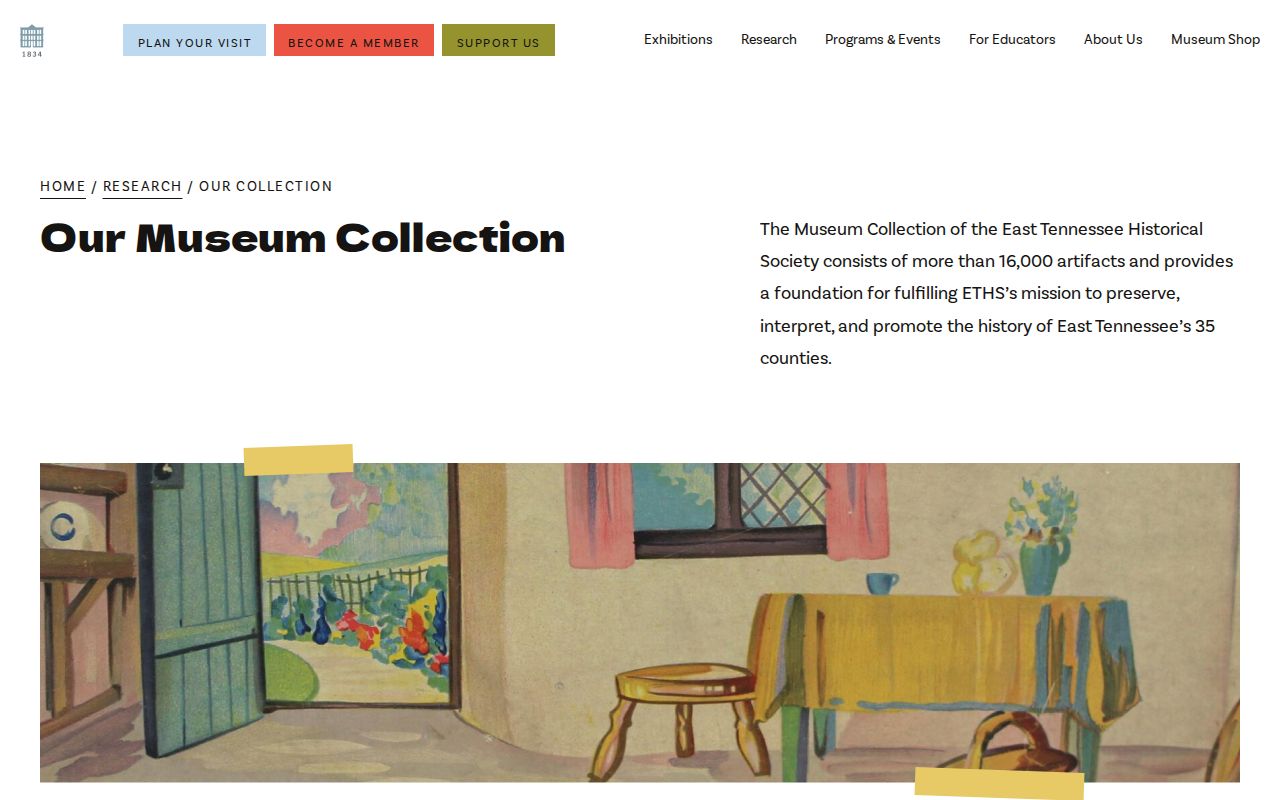
ETHS can add regional context to a directory date, while Archives and the Register remain the stronger routes for land, court, or probate evidence. TAMIS catalog searches and appointments can locate a one-of-one household or neighborhood lead, subject to donor and copyright limits.
Knox County Directory Limits
A historical directory does not prove a person was at an address on every day of its publication year. Compilers could omit, duplicate, or retain listings, and city coverage is not the same as all of Knox County. A “Knoxville” mailing address can fall outside city limits, while the Greater Knoxville cross-reference collection may cover suburban communities. Treat a directory as a dated lead and name the volume, page, and jurisdiction whenever you use it.
For records that must be confirmed, return to the relevant custodian. McClung volumes, maps, newspapers, and ETHS material make a strong historical trail when their dates and limits stay visible.