
Starting a Knox County Residents Search
There is no single official list of every Knox County resident. Start with the fact that is already solid. An address works best in the Property Assessor system and KGIS. A full name plus birth month and year fits the Tennessee voter lookup. A recorded ownership question belongs with the Register of Deeds, while an earlier household is often best found through the McClung Historical Collection. Each search is a lead, not a final identification. Compare a second source before connecting a person to an address.
The public trail is uneven by design. Parcel cards identify assessed owners and tax mailing destinations, but not everyone who lives at a property. Deeds identify parties to a recorded transfer. A voter result is a limited registration and polling-information check, not a downloadable neighborhood roster. Court dockets and vital records have their own access rules. The Knox County residents directory is most useful when those limits remain visible.
- Search the Knox County Property Assessor by owner or property address and save the parcel identifier.
- Open KGIS Maps to check the parcel, address point, districts, and nearby geography.
- Use the Tennessee voter registration lookup only to confirm a name and registration match.
- Trace ownership through the Knox County Register of Deeds when a deed or legal description is needed.
- For an older household, consult McClung directories and request records from the proper custodian when a web index ends.
Note: Write down spelling variants, search dates, and the source that supplied each fact before moving to the next record.
Knox County Offices Behind Resident Records
Three local offices form the core of a current Knox County residents directory search, but they do different work. The Register of Deeds is the source for recorded instruments. The Property Assessor maintains assessment and parcel-card information. The Election Commission handles voter-file questions and the state lookup routes. Older permanent county material has a different home at Knox County Archives. Keeping the custodian straight prevents a request from being sent to the wrong clerk.
Knox County Register of Deeds
400 Main Street, Suite 225
Knoxville, TN 37902
865-215-2330
Knox County Property Assessor
400 Main Street
Knoxville, TN
865-215-2360
Knox County Election Commission
300 West Main Street, Room 229
Knoxville, TN 37902
865-215-2480
Archives staff also assist in person, by mail, email, and phone with non-current permanent county material. The full address-led sequence belongs in the Knox County by-street directory, where parcel and deed work receive more detail.
Reading a Knox County Property Card
The assessor card is the quickest current place to anchor an address. Its model includes owner name, mailing and situs addresses, parcel identifier, tax year, property class, neighborhood, acreage, utilities, tax status, additional owners, and legal-description fields. The situs address is where the land sits. The mailing address is where tax correspondence goes. The legal description identifies the parcel. Those three entries can differ, so none should be casually substituted for the others.
| Knox search field | How it works | Useful result |
|---|---|---|
| Owner name | Searches the assessed ownership entry | Current assessment lead |
| Property address | Uses the situs location | Parcel and map starting point |
| Parcel ID | Uses control map, group, parcel, and suffix parts | Stable cross-reference for reports |
| Tax year and CAMA data | Shows assessment context | Record-date and property-card context |
The assessor search screen shows the property-search entry route used for this kind of Knox County residents directory work.
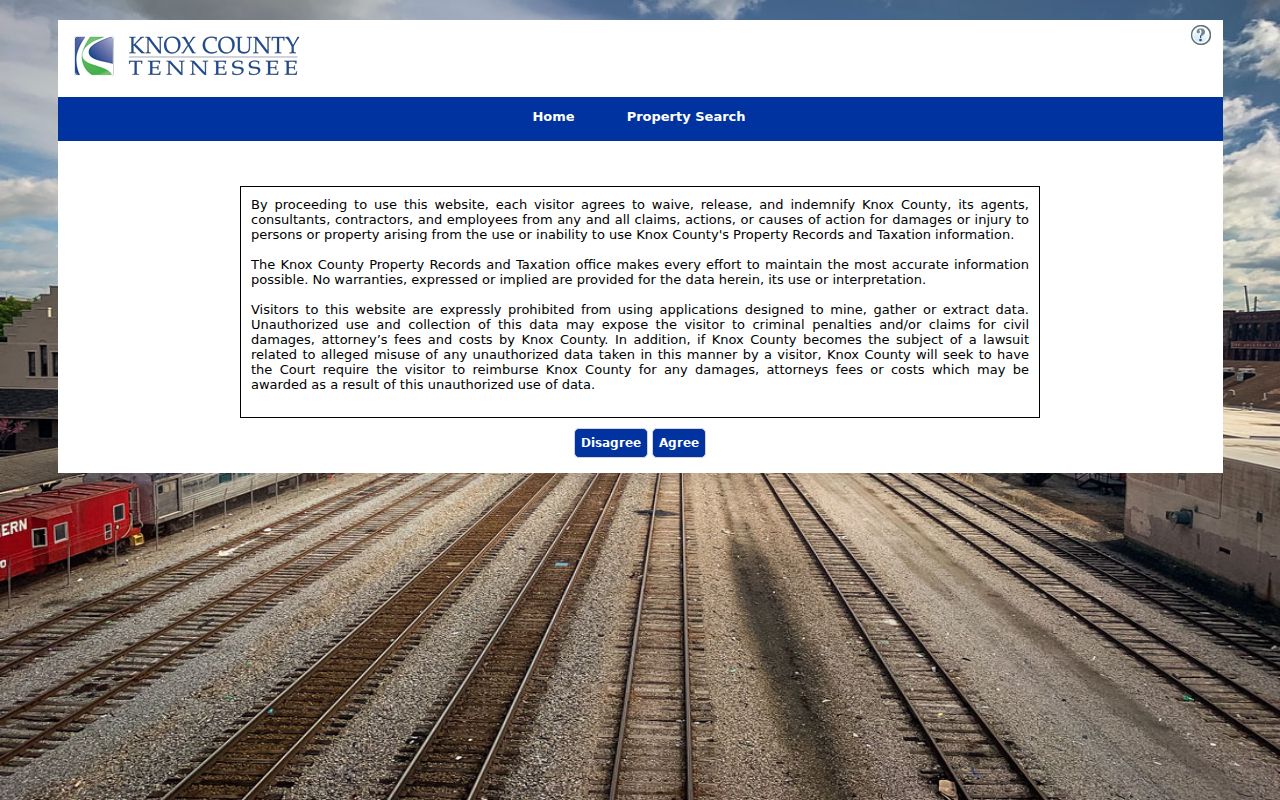
Use the card as a dated assessment source, then check the deed before drawing a title conclusion. A newly recorded deed can take about a week to appear in the assessor display.
Knox County Map and Parcel Clues
KGIS joins county, city, and KUB geographic information. Its map searches Address, Parcel, Owner, Place, or Other. Enter an address without city, state, or ZIP when using the geocoder. A house number and street core work better than a mailing-city phrase. Once the map identifies a parcel, its layers can show buildings, streets, subdivisions, ZIP codes, districts, cemeteries, city neighborhoods, and historic aerial views.
That map is a cross-reference source, not a survey. It can connect a property card to an adjacent parcel or a historical aerial, but legal boundary disputes require an actual survey. The useful Knox County residents directory habit is to preserve the parcel number and legal description whenever an address seems to have changed.
- Parcel
- A tax and mapping unit tied to land, commonly identified with a parcel ID.
- Situs address
- The physical location used for the property, which may differ from tax mail.
- Index
- A finding tool that points to a record; it is not always the record image itself.
- Criss-cross directory
- A reverse directory arranged by address rather than by personal name.
Current Knox County Resident Sources
Current sources in a Knox County residents directory are purpose-built records, not interchangeable lists. A property card speaks to assessment ownership. A recorded instrument speaks to a transaction. The voter tools supply narrow registration information. Court and custody indexes answer still different questions. Use a source for what it actually records, and then compare sources when a name is common or an address is old.
| Current source | Signal it supplies | Custodian | Access route |
|---|---|---|---|
| Property card | Assessed owner, situs, mailing address, parcel | Property Assessor | Online card or office |
| Recorded deed index | Grantor, grantee, date, legal description | Register of Deeds | Index and copy request |
| Registration lookup | Name match and polling information | Election Commission | State lookup or GoVoteTN |
| Criminal court portal | Party and case lead | Criminal Court Clerk | Portal, docket, or clerk |
| Neighborhood resources | Organization contact and boundary | City neighborhood office | Public directory and map |
A person-centered sequence needs separate safeguards and court, vital, and historical routes. Those are covered in the Knox County resident lookup.
Knox County Voter Lookup Boundaries
The Tennessee Voter Registration Information Lookup requires county, first name, last name, birth month, and birth year. GoVoteTN accepts first and last name with ZIP, or street address with ZIP, to return registration, polling, sample-ballot, and elected-official information. A no-record result can reflect spelling, suffix, county, birth-month or birth-year mismatch, a recent address change, or list maintenance. It is not proof that a person has no connection to Knox County.
The Election Commission is the route for correction, historical poll-book, precinct-file, or voter-list questions. Safe at Home participants use a substitute address and vote absentee. Public tools should never be used to work around that protection.
The state voter lookup displays the required identity fields for a Knox County check.
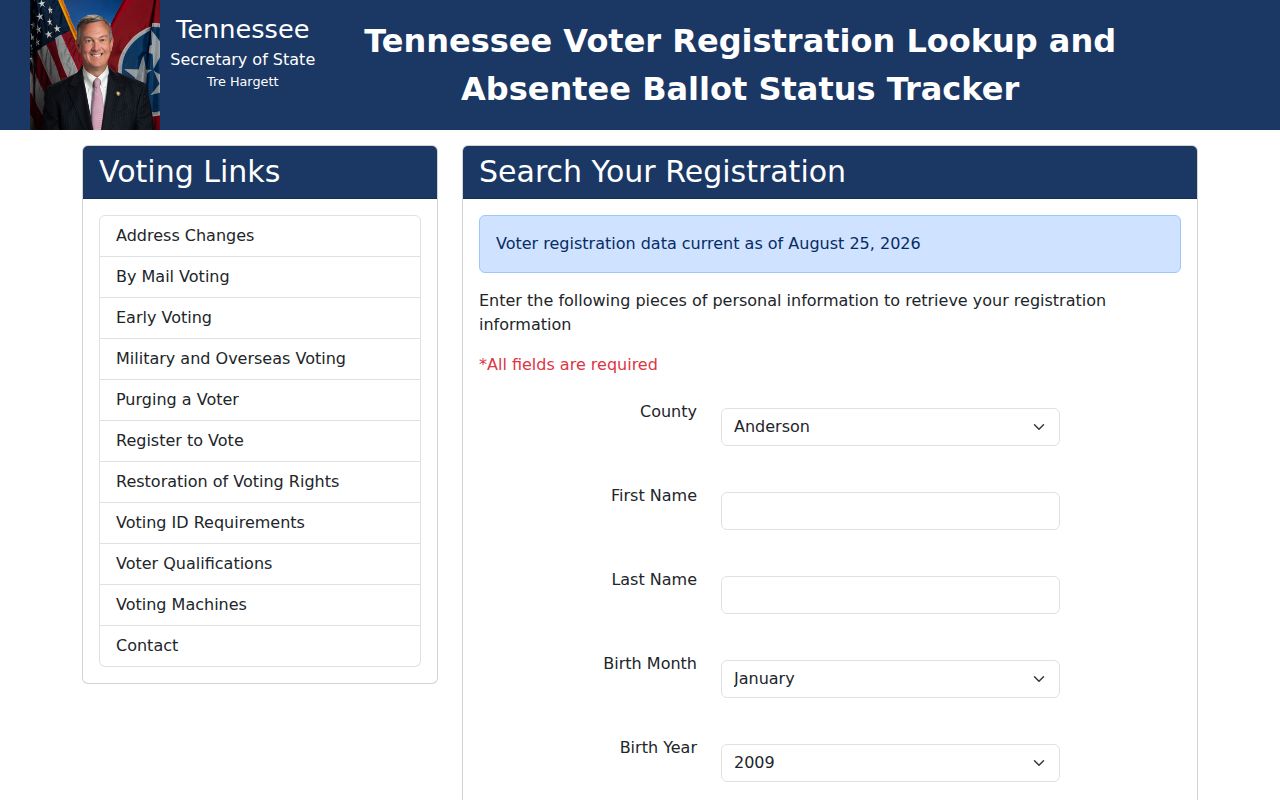
The result is useful only as a narrow registration confirmation, not as a list of everyone at an address.
Separate Knox County Court Trails
Court records do not live in one Knox County search. Criminal Court, General Sessions Criminal, and Fourth Circuit matters have the Criminal Court Clerk trail. The criminal portal reports online cases from November 2017, and its access became prepaid subscription-only on July 1, 2026. Circuit and Civil Sessions use a separate portal, with Circuit records from about April 2015 and Civil Sessions records from October 2017. Older county records, probate leads, and historical court material often require the Archives or library indexes.
The Criminal Court Clerk portal illustrates the public-access route and its coverage notice.
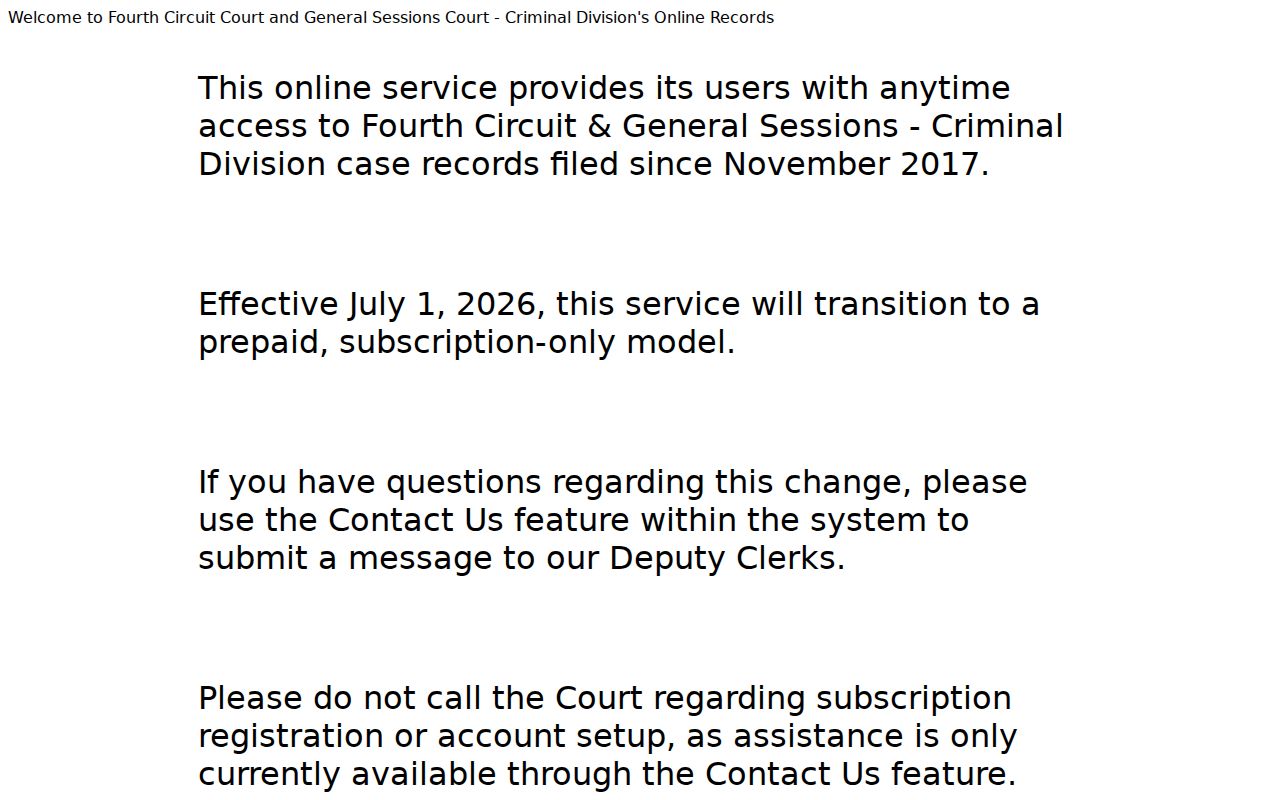
A case result is a lead. Confirm the middle name, court, dates, and disposition with the clerk or file rather than assuming that a matching name identifies one person.
Note: Sealed, juvenile, adoption, expunged, and otherwise confidential material is not made public by a routine name search.
Tennessee Vital Record Access
Vital certificates are not open name lists. Tennessee Office of Vital Records and county health departments issue statewide registered birth and death certificates, while marriage and divorce access follows entitlement rules. Birth, marriage, and divorce access is generally limited under T.C.A. §§68-3-205 and 68-3-206. Death certificates also carry close-relative and legal-right rules. Historic access changes after 100 years for birth and 50 years for death, marriage, divorce, and annulment.
Qualified requests use in-person, mail, or authorized online routes, with identity and application requirements. The state lists a $15 fee for the first and each additional birth, death, marriage, or divorce copy, and a $15 no-record search. A library index, obituary, or delayed-birth index may offer a historical lead but is not a certificate.
Tennessee's certificate instructions set out the in-person, mail, and authorized online paths.
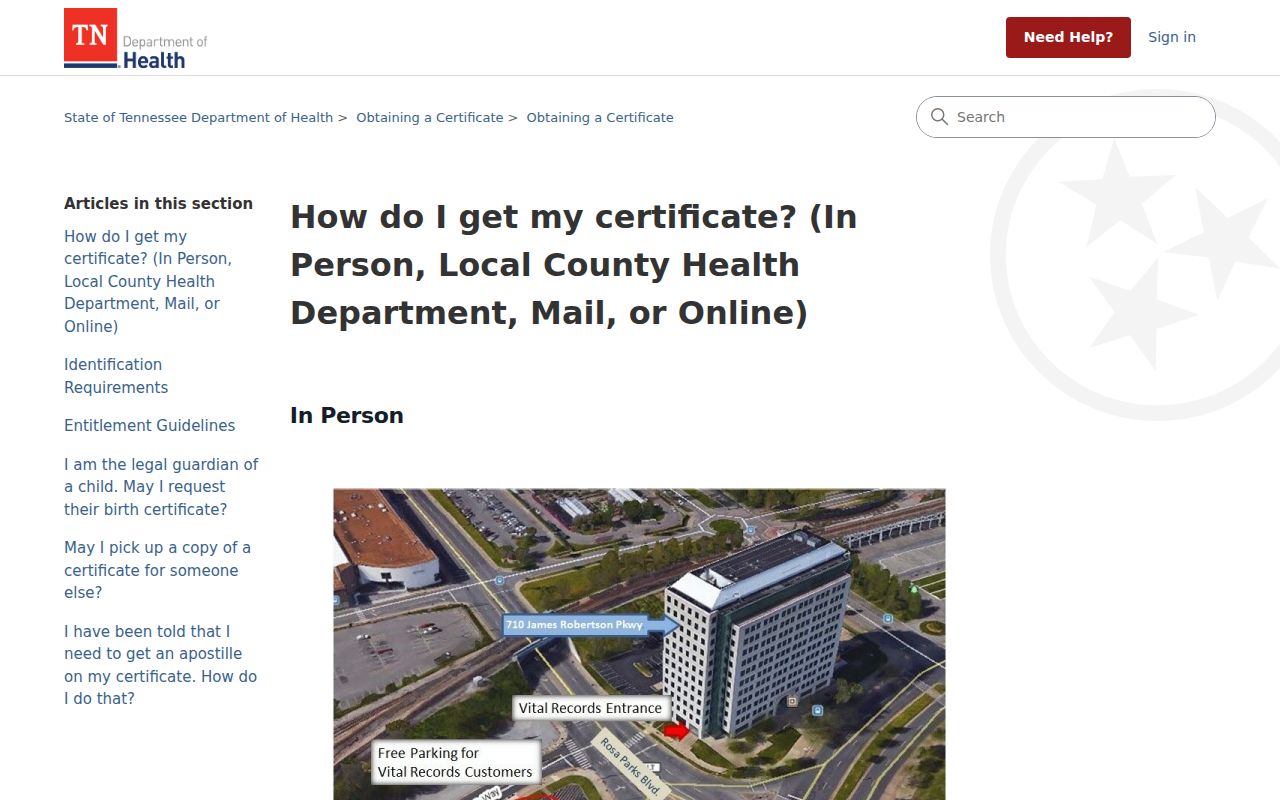
Use the application that matches the event, relationship, and requested record rather than assuming an online search can release a restricted certificate.
Knox County ZIP and City Lines
ZIP codes describe mail delivery, not county or municipal jurisdiction. The KGIS Area Zip Codes map names 28 area ZIP codes and communities such as Bearden, Fountain City, Halls, Karns, Hardin Valley, Concord, Powell, Mascot, Gibbs, and Holston Hills. A directory entry, mailing address, and parcel location can therefore use different place names. Knoxville city records concern addresses inside city limits, while an address called Knoxville may be outside the city or in a neighboring municipality area.
Use the map to orient a search, then verify a specific mailing result with USPS and confirm the government jurisdiction before requesting permits or code material. The official map did not settle every web-list claim about 37721, so address verification is safer than a countywide claim.
Tennessee Property Assessment Data provides another official owner, address, and parcel search model.
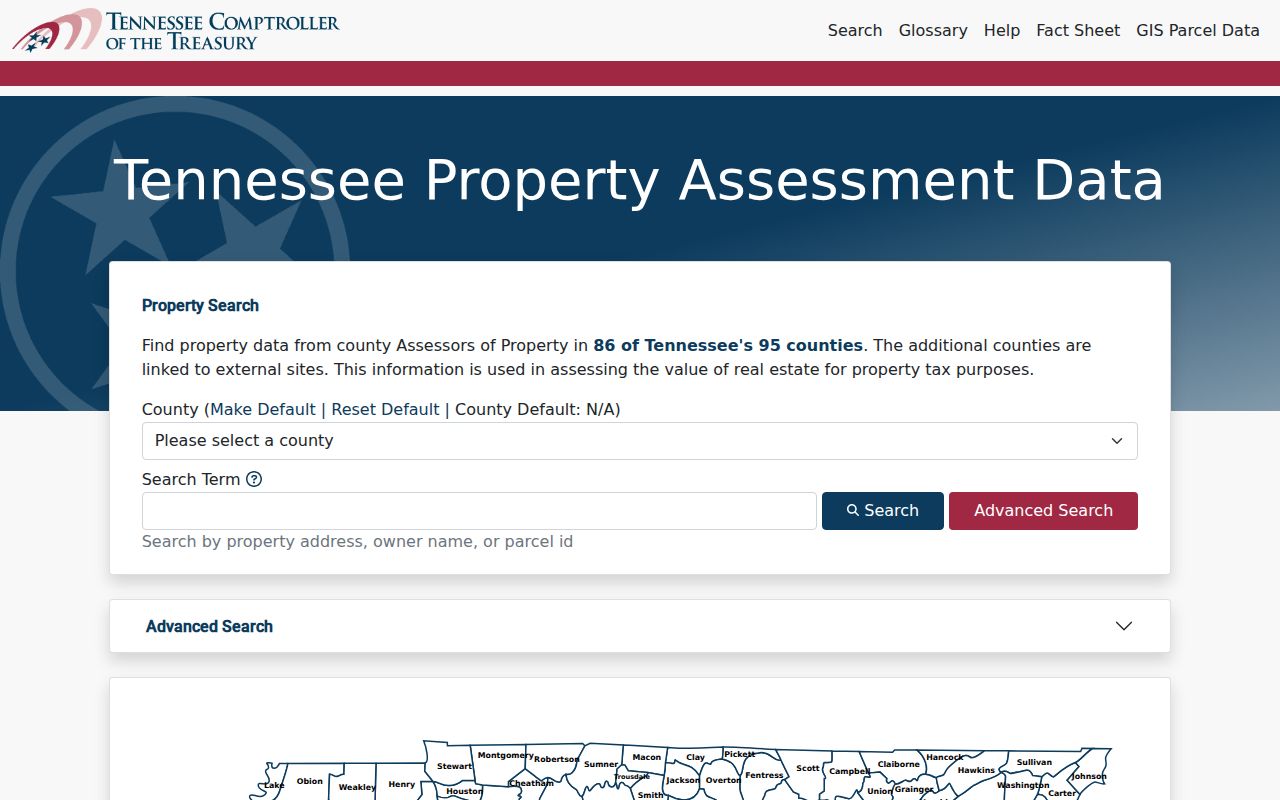
Once a ZIP narrows the geography, use the final street address and parcel information rather than treating a delivery zone as a resident list.
McClung's Knoxville Directory Shelf
The Calvin M. McClung Historical Collection at the East Tennessee History Center is Knox County's strongest directory-era resource. It holds a rare complete set of Knoxville city directories from 1859 to the present, with volume-by-volume gaps to check, and telephone directories from 1898 forward. The catalog includes a 1859–60 photocopy, 1901 and 1902 holdings, sequential publication from 1923, later Polk volumes, and a noted gap when a 2009 Knoxville City Directory was not published.
Directories can preserve names, addresses, occupations, spouse or widow notation, and reverse entries. They are historical evidence, not proof that every named person occupied a property on a particular day. McClung materials do not circulate, and special collections require an appointment. The collection's full runs, abbreviations, and reading method are detailed in the Knox County city directories.
Tracing Past Knox County Residents
Older records move outward from a modern street address. Preserve the current parcel and legal description, then search the recorded deed chain backward through grantor and grantee references. When a street number fails, the legal description, plat, subdivision, and map layers often bridge the change. McClung directories, telephone books, newspapers, the Knoxville Journal obituary index, probate books, and the 1917 Sanborn volume offer household and place clues for different eras.
Knox County Archives preserves non-current permanent county records beginning in 1792. Its probate index covers 1954–2024 files, while pre-1954 material can be harder to access and may appear in will or estate-settlement books. Archives staff retrieve from closed storage and assist by several channels. A historical research path needs a year, place, and named record type, not a broad request for every fact about a person.
Knox County Record Privacy Limits
Public does not mean unrestricted. The assessor's UNLISTED option can hide an ownership name from the searchable display for a primary residential property, although the underlying card, roll, and an open-record response can remain available. Driver-license and utility customer data are not general resident sources. Protected vital records, sealed and juvenile court material, confidential law-enforcement information, and Safe at Home addresses require their own rules.
| Official record route | What it is good for | What it cannot establish |
|---|---|---|
| Assessor and deed sources | Parcel, assessed owner, recorded transfer | Every present household member |
| Voter tools | Limited registration and polling confirmation | A public street roster |
| Library directories | Historic name and address clues | Current location or title |
Requesting Missing Knox County Records
The Tennessee Public Records Act, T.C.A. §§10-7-501 et seq., especially §10-7-503, gives Tennessee citizens a route to inspect or copy non-exempt public records. Send a focused request to the actual custodian. State guidance permits requests in person, by phone, fax, mail, email, or portal, although a copy request may need a written form. An inspection-only request generally cannot be forced into writing.
If the record is not promptly available, the custodian must within seven business days provide it, deny it in writing with the basis, or give a reasonable time estimate. The law does not make an office create a new report or run custom analysis. Name the address or parcel, time range, department, record type, and whether inspection or a copy is wanted. Knoxville's public-records route is especially useful for incomplete historical permit and property files.
Knoxville's public-records guide explains the city routing process.
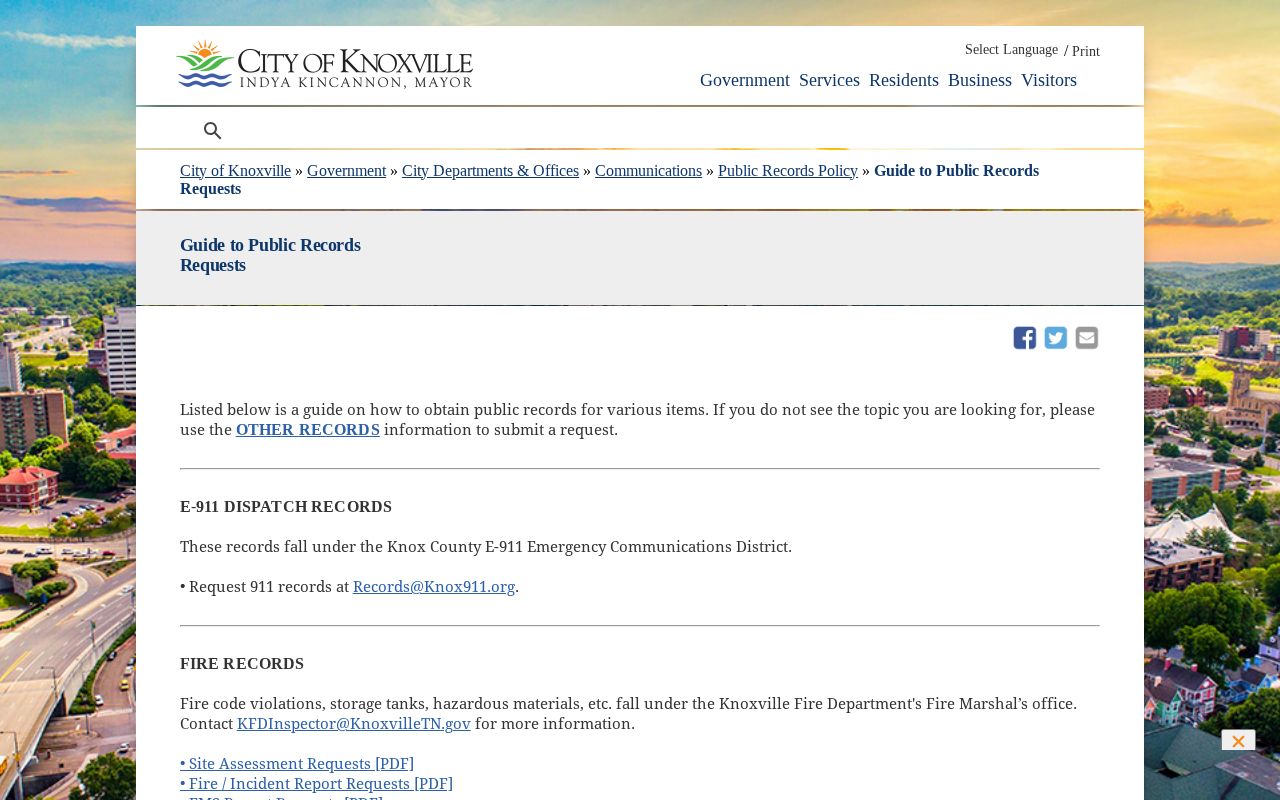
Ask the recipient whether a city, county, court, library, or state custodian holds the requested series before sending a follow-up.
Knox County Fraud Alert Check
The Register of Deeds offers a free name-based Property Fraud Alert email service. It sends an alert when a deed or mortgage associated with the submitted name is recorded. That is a sensible record-safety tool for an owner or family member, but it does not prevent fraud, establish title, or prove that two people with the same name own the same parcel. Verify a suspicious event with the Register and the recorded instrument.
Free official tools are also worth checking before paying for an unverified claim. Tennessee's ClaimItTN program is a free name lead for abandoned property, but it is not a current-address database. Treat both tools as narrow prompts to verify an official record, not as a replacement for the Knox County residents directory trail.
Note: A record alert or a name match should trigger verification with the custodian, not an assumption about a person or property.